

Diesel Bug: Bacterial Fuel Contamination on Yachts
Captain's Corner Magazine · 16 October 2026
Causes, prevention and the correct response when it strikes.
Fuel contamination by microorganisms—commonly called ‘diesel bug’—is one of the most underestimated causes of fuel-system problems on yachts. It can block filters, restrict fuel flow, damage pumps and injectors, corrode tanks and, in severe cases, cause complete engine failure.
What Is Diesel Bug?
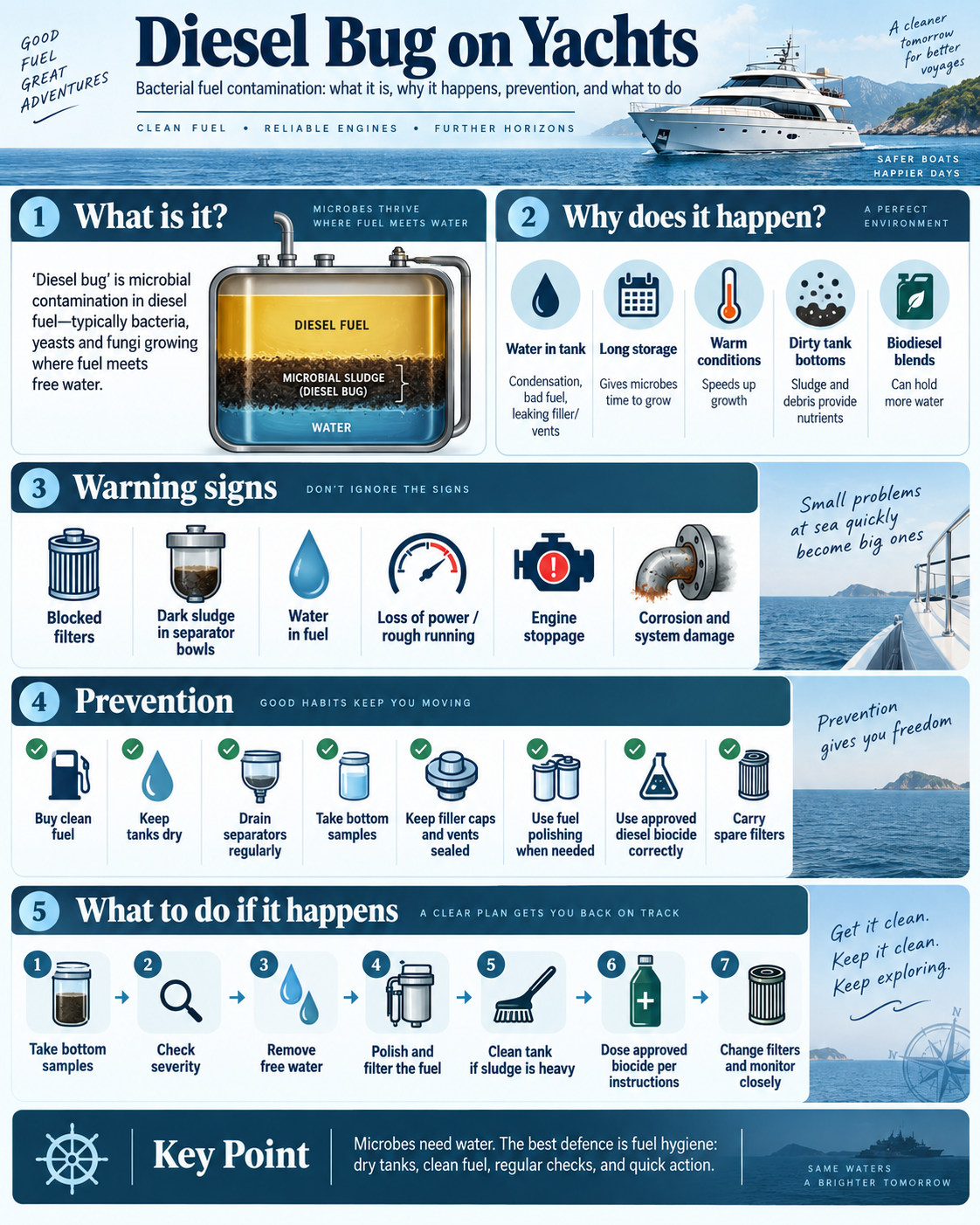
Despite the name, diesel bug is not normally a single bacterium. It is a community of bacteria, yeasts and fungi that can develop inside diesel tanks. The organisms grow mainly where diesel and free water meet, especially at the bottom of a tank, and can form a dark, sticky biomass that contaminates the fuel system.
Why Does It Happen?
The essential ingredient is water. Water may enter through condensation, contaminated bunker fuel, leaking filler caps or inspection covers, poorly positioned tank vents, or other routes of ingress. Once water collects at the bottom of a tank, microorganisms can live in it while feeding on components of the diesel.
Modern diesel containing FAME biodiesel can be more vulnerable because FAME tends to absorb and retain more water than conventional mineral diesel. Yachts are also exposed because they often carry large quantities of fuel for long periods with relatively low turnover.
What Does Contamination Look Like?
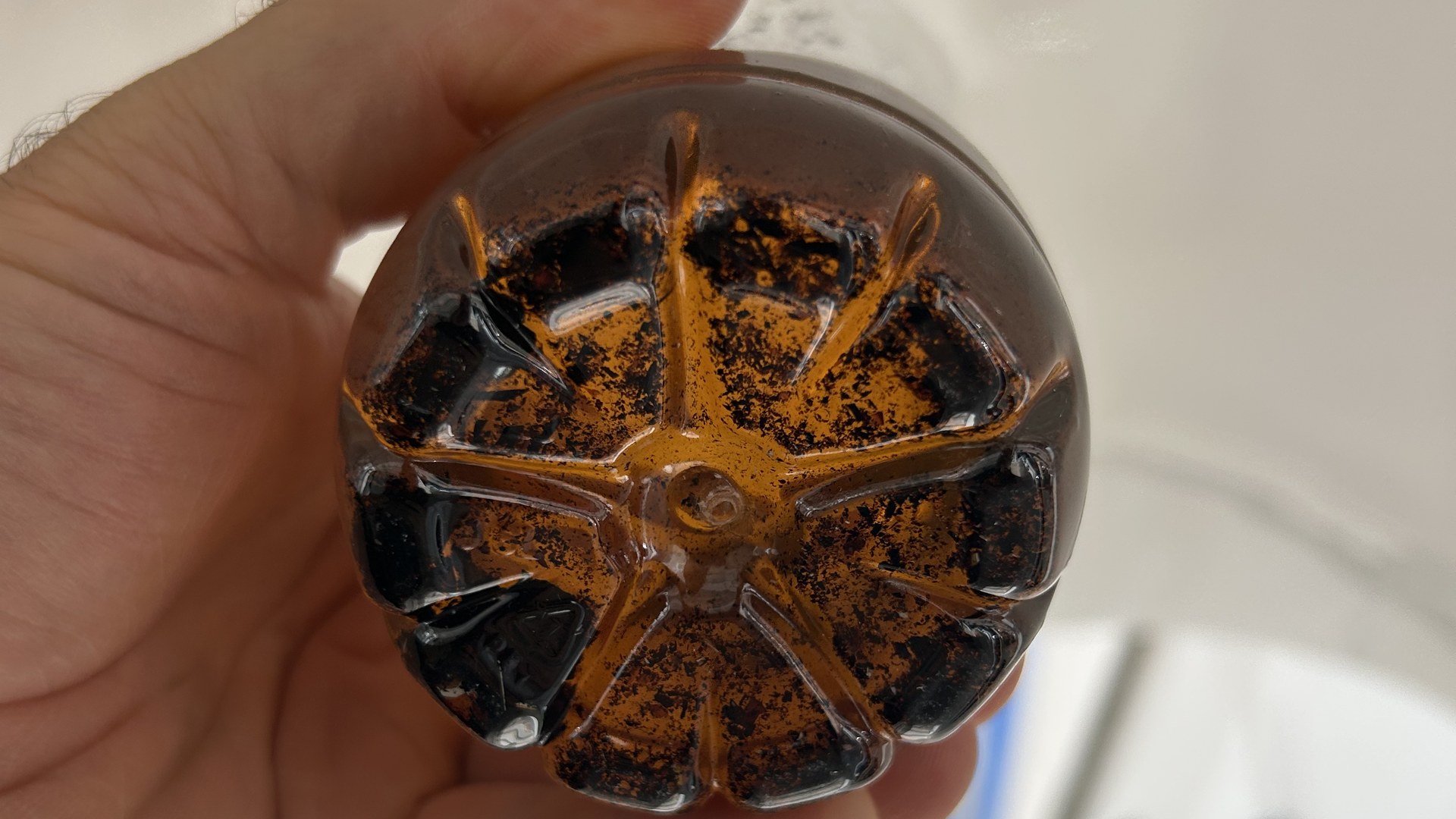
Early contamination may be difficult to see. As growth increases, it can produce brown, black or greenish slime and sediment around the fuel-water interface. This material can then be drawn into the vessel’s fuel system.
Typical warning signs: frequent primary-filter blockage; dark sludge in Racor bowls or filters; excessive sediment in tank-bottom samples; water in separators; restricted fuel flow; fluctuating RPM; loss of power; or unexpected engine shutdown.
How to Prevent It
Prevention is mainly about fuel hygiene and water control. Tanks should be checked periodically at their lowest points, with accumulated free water drained or extracted. Fuel should preferably be purchased from reliable, high-turnover suppliers, and tank-bottom samples should be taken periodically—especially after bunkering or long storage.
Keep deck fillers, O-rings, inspection covers and vents watertight. Drain water separators regularly. For long storage, avoid unnecessary fuel ageing and, where appropriate for the installation, keep tanks reasonably full to reduce the air space in which condensation can form.
Regular fuel polishing can remove suspended water, sediment and particulate contamination before these reach the engines. An approved diesel biocide may be used preventively or as treatment when appropriate, but only at the manufacturer’s specified concentration. More biocide is not necessarily better.
When Contamination Is Found: Step-by-Step
1. Take representative fuel samples. Draw samples from the lowest possible points of each tank, including the fuel-water interface if accessible. Look for free water, sediment and gelatinous or dark material. A microbial test kit or laboratory analysis can confirm the diagnosis.
2. Assess the severity. Light contamination may be recoverable through water removal, treatment and intensive polishing. Heavy sludge, repeated filter blockage or widespread deposits usually indicate that physical tank cleaning is required.
3. Remove all free water. Drain or pump out water from the tank bottom. This is critical; leaving water behind allows microorganisms to re-establish quickly.
4. Polish the fuel. Circulate diesel through an effective water separator and progressively fine filtration system. If contamination is severe, the fuel may need to be temporarily removed so that the tank can be cleaned properly.
5. Clean the tank if necessary. Heavy deposits should be physically removed from the tank bottom, baffles and accessible surfaces. With severe contamination, professional tank cleaning is usually more effective than repeatedly treating contaminated fuel.
6. Apply an approved diesel biocide. Use a product specifically approved for diesel and follow its shock-treatment dosage exactly. Biocide kills microorganisms, but the dead biomass does not disappear; it must still be removed by filtration, polishing or physical cleaning.
7. Replace and monitor filters. Inspect and normally replace primary and secondary fuel filters after treatment. Carry spare filters because loosened contamination may cause rapid filter loading during the first operating hours.
8. Find the root cause. Inspect filler seals, tank vents, inspection covers, separators and bunkering practices. Continue tank-bottom sampling until the system remains clean and free of water.
Polishing, Biocide or Tank Cleaning?
Fuel polishing and biocide treatment are useful tools, but neither automatically removes heavy sludge stuck to tank surfaces. A lightly contaminated system may respond well to water removal, biocide and repeated polishing. A heavily infected tank usually requires physical cleaning, followed by polishing, filter replacement and continued monitoring.
The Critical Point
The real enemy is the combination of water, microorganisms, stagnant fuel and poor tank housekeeping. The most reliable strategy combines water removal, effective filtration or polishing, suitable microbial treatment, physical cleaning when required, and prevention of future water ingress.
On a yacht, clean fuel is more than a maintenance issue. A reliable fuel supply is fundamental to propulsion, manoeuvrability and safety at sea.
Technical References
UK MOD JSP 317 – Defence Fuels Policy, Guidance. CIMAC Guideline: Marine Fuels Containing FAME (2024). UK MAIB Safety Digest – microbial contamination case.
More in Tech
 Tech
Choosing the Right Yacht Planned Maintenance System
A concise comparison of 14 yacht PMS, SMS and maintenance platforms.
Captain's Corner Magazine · 30 September 2026
 Tech
How Much Does It Really Cost to Maintain a Yacht?
Buying a yacht is only the beginning. Keeping it safe, reliable and in good condition requires ongoing servicing, repairs and periodic replacement of expensive equipment.
Captain's Corner Magazine · 16 October 2026
 Tech
Seacock Valves: Materials, Galvanic Protection, Installation and Maintenance
Every opening below the waterline is a potential flooding point. How to choose, install, protect and maintain the fittings that keep a yacht safe — and what to do if a seacock seizes.
Captain's Corner Magazine · 10 October 2026