

Seacock Valves: Materials, Galvanic Protection, Installation and Maintenance
Captain's Corner Magazine · 10 October 2026
Every opening below the waterline is a potential flooding point. How to choose, install, protect and maintain the fittings that keep a yacht safe — and what to do if a seacock seizes.
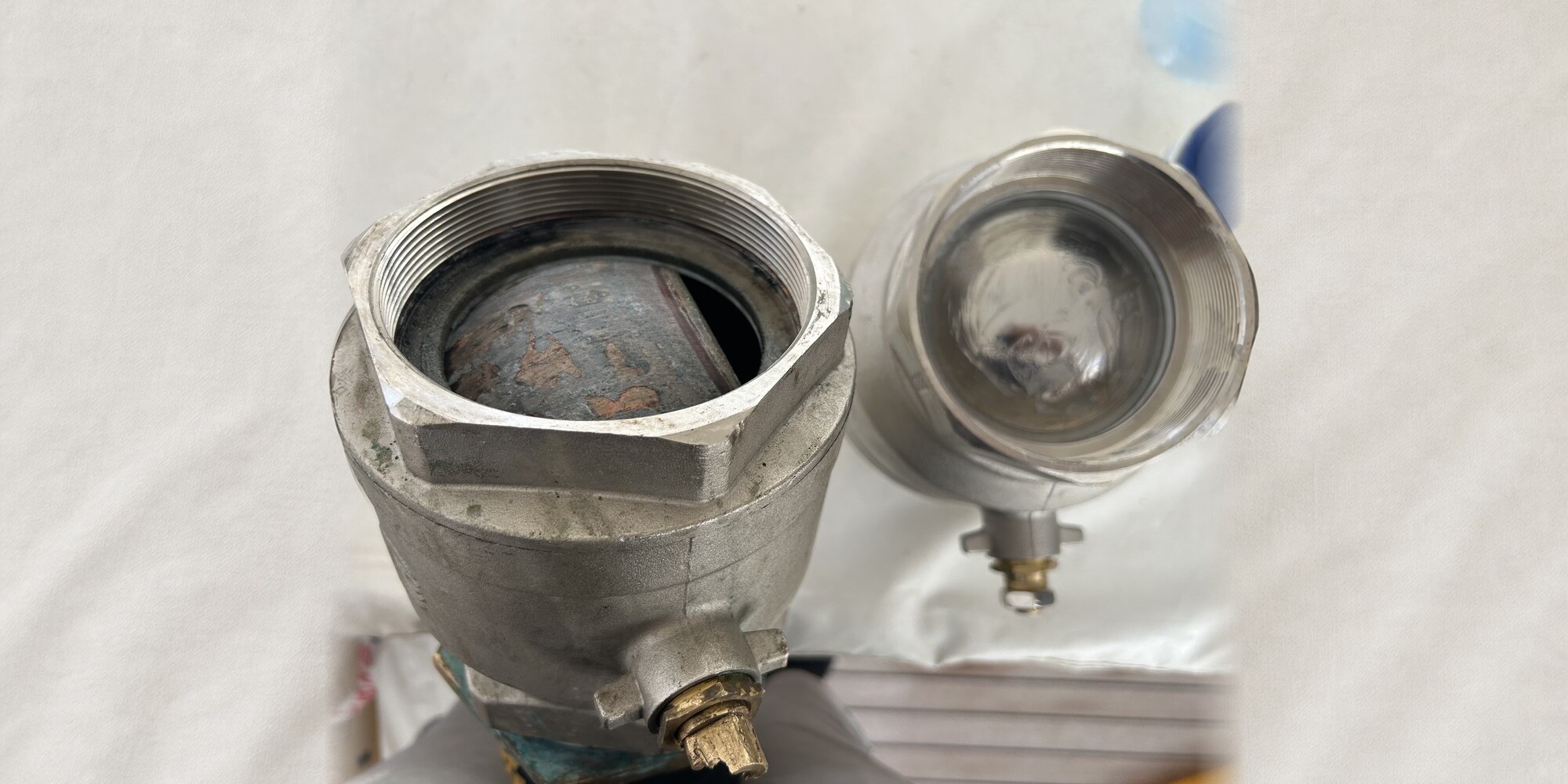
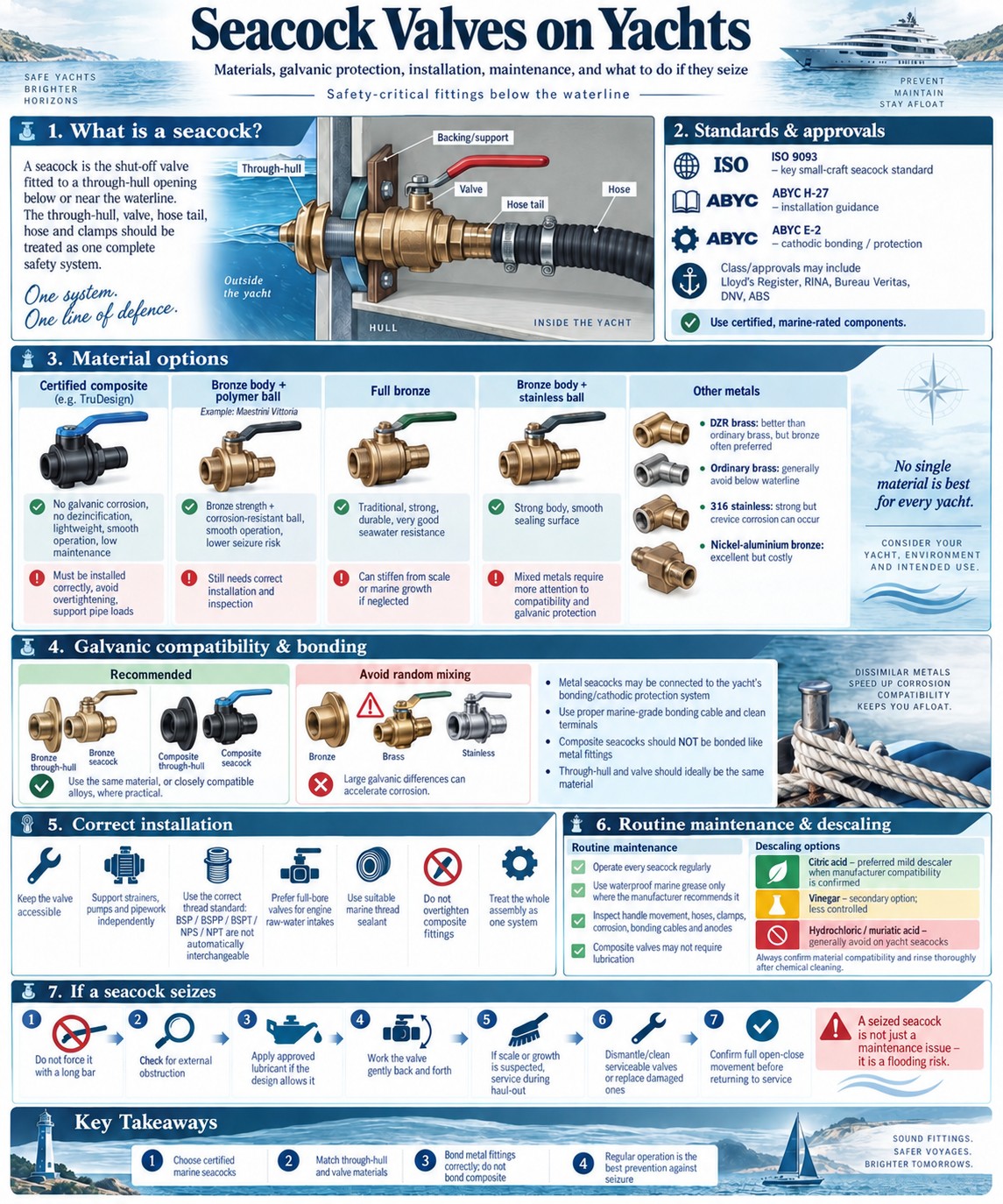
A seacock is one of the simplest but most safety-critical components aboard a yacht. Every opening below the waterline is a potential flooding point, so the through-hull fitting, valve, backing structure, hose tail, hose and clamps should be considered one complete system. A good seacock must resist seawater corrosion, galvanic attack, vibration, marine growth and scale while remaining capable of being closed immediately in an emergency.
Standards and Classification
For recreational craft up to 24 metres, the principal international reference is ISO 9093:2020 – Small Craft: Seacocks and Through-Hull Fittings. Larger or commercially operated yachts may additionally fall under classification requirements from Lloyd’s Register, RINA, Bureau Veritas, DNV or ABS. ABYC H-27 is another important reference for seacocks and through-hull fittings, while ABYC E-2 covers cathodic protection and bonding systems. Quality manufacturers offering certified or class-approved products include TruDesign, Maestrini, GUIDI and GROCO, although certification varies by model and size.
Which Material Is Best?
Four material architectures dominate the marine market: certified composite, bronze body with a polymer ball, full bronze, and bronze body with a stainless-steel ball. Each trades corrosion resistance against mechanical strength.
1. Certified Composite
A certified glass-reinforced composite system such as TruDesign is an excellent modern choice. Its principal advantages are no dezincification, no galvanic corrosion, electrical non-conductivity, no bonding requirement, low weight, smooth operation and low maintenance. The main consideration is mechanical installation: composite fittings must be properly supported, not over-tightened, and may require manufacturer-approved load-bearing collars.
2. Bronze Body + Polymer Ball
Maestrini’s Vittoria range includes a marine-bronze body with an acetal polymer ball and PTFE seats and seals. It combines the structural strength and seawater resistance of bronze with a non-metallic ball that cannot suffer metallic corrosion or dezincification. The polymer ball can also reduce one possible source of stiffness caused by corrosion or deposits on metallic ball surfaces.
3. Bronze Body + Bronze Ball
A high-quality full-bronze valve remains one of the traditional benchmarks for marine service. Advantages include excellent mechanical strength, long service life and good seawater corrosion resistance. Salt, calcium deposits, sediment and marine growth can, however, increase operating friction if the valve remains untouched for long periods. Maestrini and GUIDI manufacture full-bronze designs; GUIDI also offers its specialised Non-Stick valve concept intended to reduce internal encrustation and seizure.
4. Bronze Body + Stainless-Steel Ball
Manufacturers such as GROCO offer bronze-bodied valves with stainless-steel balls and PTFE seats. These provide high mechanical strength and a smooth sealing surface, although two different metallic materials are present in the same seawater environment, making alloy compatibility and cathodic protection more important.
Other Materials
DZR brass is substantially better than ordinary yellow brass because it is formulated to resist dezincification, although high-quality marine bronze is generally preferable for demanding permanent below-waterline installations. Ordinary plumbing brass should generally be avoided because zinc can leach from the alloy, leaving a weakened porous copper-rich structure. 316 stainless steel is strong but not immune to crevice corrosion in stagnant seawater. Nickel-aluminium bronze is an excellent high-performance seawater alloy but is less common and usually more expensive.
Match the Through-Hull and Valve Materials
Where practical, the through-hull and seacock should be made from the same material or from closely compatible alloys. A bronze through-hull with a bronze seacock, or a composite through-hull with a composite seacock, is preferable to randomly combining bronze, brass and stainless steel. When two dissimilar metals are electrically connected while immersed in seawater, a galvanic cell can develop and the less noble metal may corrode preferentially. The greater the separation between the metals on the seawater galvanic series, the greater the potential galvanic driving force. Exact electrical potentials vary with salinity, temperature, oxygen content, flow and surface condition, so compatibility should be assessed using a seawater galvanic series rather than a single fixed voltage value.
Bonding and Galvanic Grounding
Metallic seacocks may form part of the yacht’s cathodic bonding system, sometimes informally called galvanic grounding. Bonding conductors electrically connect underwater metal fittings to the sacrificial-anode system so the anodes corrode preferentially instead of protected components. Use properly sized marine-grade tinned copper cable, clean secure terminals and any dedicated bonding stud provided by the valve manufacturer. Bonding should follow the yacht’s existing electrical and cathodic-protection design; randomly bonding previously isolated components can create unwanted galvanic paths. Composite seacocks do not need — and should not receive — conventional metallic bonding connections.
Installation
Firmly support the seacock and associated pipework; do not let heavy strainers or pumps load the valve. Keep the valve easily accessible and capable of full open-to-closed movement without tools. Use compatible thread standards — BSP, BSPP, BSPT, NPS and NPT are not automatically interchangeable. Prefer full-bore, full-flow valves for large engine raw-water intakes to minimise cooling-water restriction. Use manufacturer-approved thread sealant and never over-tighten composite fittings.
Waterproof Grease and Routine Maintenance
The best defence against seizure is simple: operate every seacock regularly. Opening and closing the valve breaks up early salt deposits, marine organisms and sediment before they immobilise the mechanism. Metal valves designed for lubrication can benefit from a water-resistant marine grease compatible with PTFE seats, O-rings and other seal materials, applied only through the manufacturer’s lubrication point or to the stem and mechanism as specified. Do not assume every valve requires grease: TruDesign, for example, states that its composite ball valves do not require routine lubrication. Routine inspection should include handle movement, hoses and clamps, bonding cables and terminals, corrosion, pink or porous dezincified surfaces, backing structures, leaks, marine growth and sacrificial-anode condition.
Acid Cleaning and Descaling
Marine growth and mineral scale can make an otherwise healthy seacock progressively harder to operate. Chemical descaling can help, but acid cleaning should be treated as a controlled maintenance procedure rather than routine treatment.
Citric Acid
Citric acid is generally the preferred mild option when the valve manufacturer confirms compatibility. A diluted solution or purpose-made marine descaler can help dissolve calcium and mineral deposits on suitable bronze or stainless components. Exposure should be controlled and followed by thorough fresh-water rinsing. An assembled valve may contain bronze, stainless steel, polymers, PTFE seats, elastomers and sealants, so compatibility must be confirmed for the complete assembly.
Vinegar
Vinegar contains acetic acid and can dissolve light calcium-carbonate deposits. However, vinegar is generally not considered the preferred choice for cleaning an expensive bronze or mixed-material seacock. Its concentration is less controlled, long soaking periods are often used, and acetic acid can interact with copper alloys. A controlled citric-acid treatment or manufacturer-approved marine descaler is generally preferable.
Hydrochloric / Muriatic Acid
Strong hydrochloric or muriatic acid should not normally be used on yacht seacocks. Incorrect concentration or exposure can attack bronze, brass and stainless components, affect seals and remove protective oxide layers. Do not pour hydrochloric acid into a seized seacock simply to free it.
Safe Descaling Procedure
Preferably work during haul-out, or positively isolate the fitting from the sea. Remove loose marine growth mechanically first. Confirm chemical compatibility with the valve manufacturer. Use the weakest effective citric-acid solution or approved marine descaler, and keep exposure time controlled — do not soak indefinitely. Rinse thoroughly with fresh water, inspect the valve, lubricate only if approved, and verify full smooth movement.
What To Do When a Seacock Seizes
Never apply extreme force to a seized valve while the yacht is afloat. A long extension bar can break the handle, stem, valve body or through-hull and create an uncontrolled flooding emergency. Check that the handle or external mechanism is not obstructed. Where a lubrication fitting exists, use the manufacturer-approved lubricant and gently work the valve backwards and forwards. If scale or marine growth is suspected, service and descale preferably during haul-out. Dismantle and clean serviceable valves only according to manufacturer instructions, and replace any valve showing serious corrosion, cracking, dezincification or persistent stiffness.
The Key Principle
There is no universal winner for every yacht. Certified composite systems such as TruDesign offer outstanding corrosion resistance and low maintenance. High-quality bronze remains one of the most proven materials for strength and longevity, while bronze-body and polymer-ball systems such as Maestrini Vittoria combine metallic structural strength with corrosion-resistant internals. Whatever system is selected, reliability depends on five principles: compatible materials, correct installation, proper galvanic protection, regular operation and controlled maintenance. A seacock that cannot be closed immediately when required is not merely a maintenance problem — it is a flooding risk.
Technical References
ISO 9093:2020 — Small Craft: Seacocks and Through-Hull Fittings. ABYC H-27 — Seacocks, Thru-Hull Fittings and Drain Plugs; ABYC E-2 — Cathodic Protection. TruDesign — marine ball valves and installation and certification guidance. Maestrini — VITTORIA full-bronze and polymer-ball marine valves. GUIDI — marine bronze and Non-Stick valves. GROCO — BV/SBV bronze marine ball valves and service guidance.
More in Tech
 Tech
Choosing the Right Yacht Planned Maintenance System
A concise comparison of 14 yacht PMS, SMS and maintenance platforms.
Captain's Corner Magazine · 30 September 2026
 Tech
How Much Does It Really Cost to Maintain a Yacht?
Buying a yacht is only the beginning. Keeping it safe, reliable and in good condition requires ongoing servicing, repairs and periodic replacement of expensive equipment.
Captain's Corner Magazine · 16 October 2026
 Tech
Diesel Bug: Bacterial Fuel Contamination on Yachts
Causes, prevention and the correct response when it strikes.
Captain's Corner Magazine · 16 October 2026