

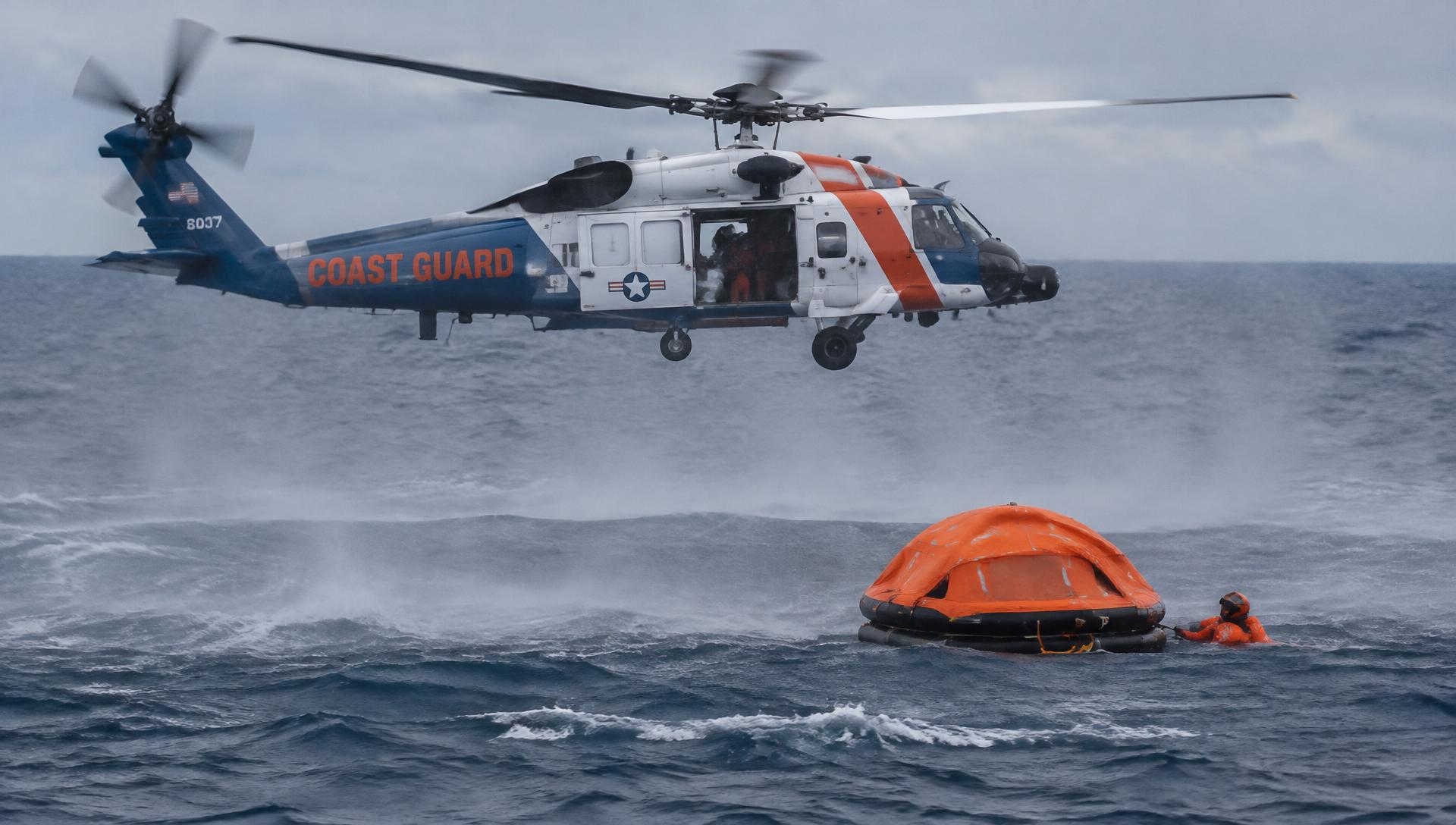
Life-Saving Equipment Offshore: PLBs, EPIRBs, SARTs and Satellite Communicators
Captain's Corner Magazine · 17 October 2026
Four technologies that decide how quickly rescuers find you — PLBs, EPIRBs, SARTs and satellite communicators — and why a well-equipped offshore yacht carries several of them.
When operating offshore, communication equipment is not simply about staying connected — it can determine how quickly rescuers locate a vessel or person in distress. Four particularly important technologies are PLBs, EPIRBs, SARTs and satellite communicators such as Garmin inReach.
Although their functions overlap, they are not interchangeable. A well-equipped offshore yacht will normally carry several of them because each solves a different part of the rescue problem.
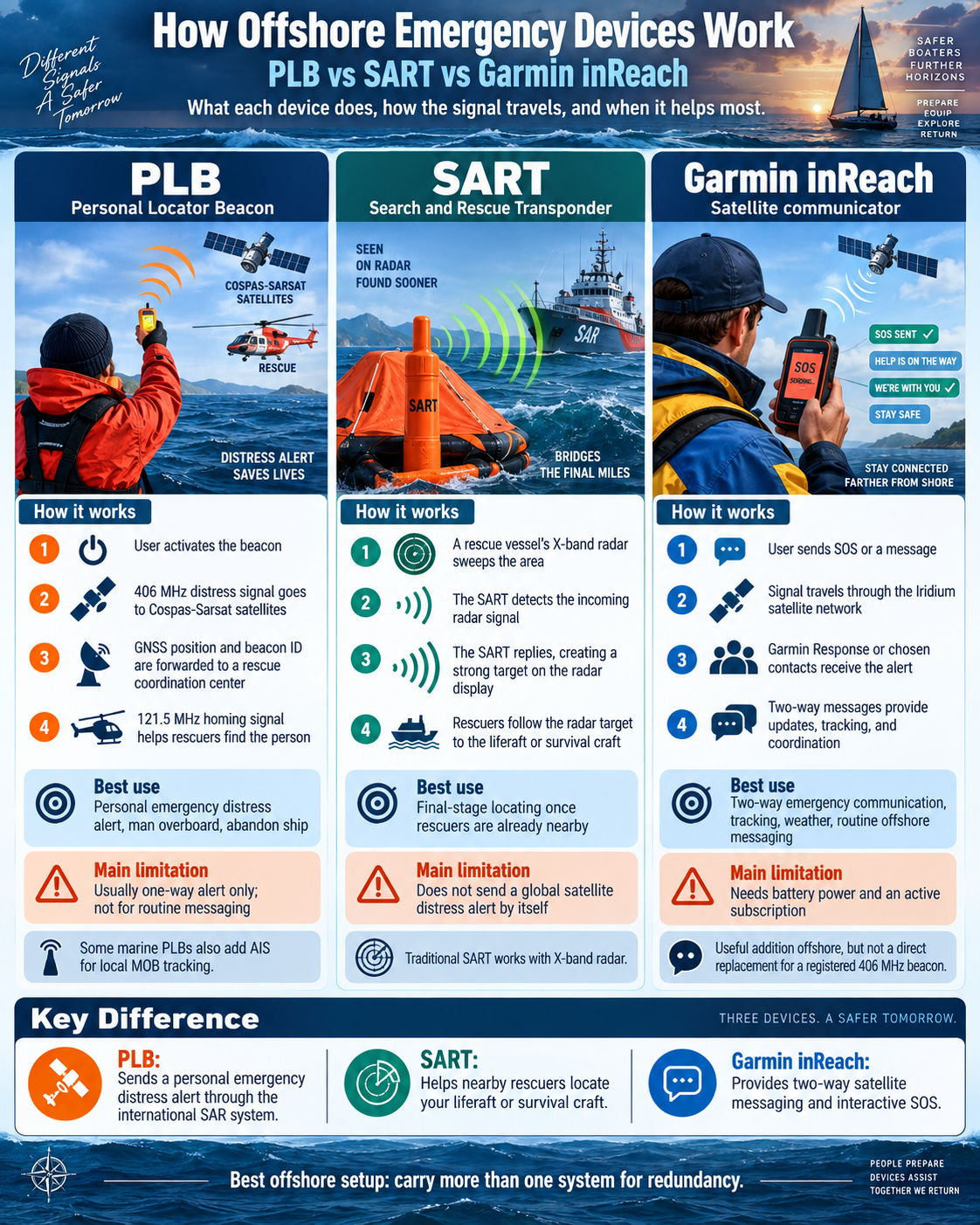
Quick Comparison
Quick comparison: the Ocean Signal rescueME PLB3 and the ACR ResQLink AIS are personal/MOB devices alerting via 406 MHz, GNSS and AIS with no subscription, at roughly $590-$650 and $619.95 respectively. An EPIRB protects the whole vessel via 406 MHz satellite alert for about $680-$1,050, again with no subscription. A radar SART (around $600) answers X-band radar to help rescue vessels home in, and the Garmin inReach Mini 3 ($449.99 plus a required plan) adds two-way satellite messaging over Iridium. Approximate U.S. pricing as of September 2026; local pricing, programming requirements and dealer offers vary.
1. Personal Locator Beacons — PLBs
A Personal Locator Beacon (PLB) is designed to stay with the individual rather than the vessel. This makes it especially valuable for crew working on deck at night, solo sailors and anyone at risk of falling overboard.
When activated, a modern PLB transmits a 406 MHz distress signal through the international Cospas-Sarsat satellite system, including its identity and GNSS position. Rescue services can then be alerted. A 121.5 MHz homing transmitter helps SAR aircraft or vessels locate the beacon during the final stage of a rescue.
Ocean Signal rescueME PLB3
The Ocean Signal rescueME PLB3 is one of the most advanced marine PLBs currently available. In addition to the standard 406 MHz satellite alert and 121.5 MHz homing signal, it incorporates AIS, Return Link Service (RLS), GNSS, visible and infrared strobes, and NFC smartphone connectivity. It operates for more than 24 hours after activation and requires no subscription.
AIS is particularly valuable offshore. When a person falls overboard, nearby AIS-equipped vessels can see the casualty's position while the 406 MHz signal simultaneously alerts the international SAR system. RLS provides confirmation that the satellite distress alert has been received.
Strengths: global SAR alerting, AIS MOB transmission, RLS confirmation, compact size, lifejacket integration and no monthly fees. Weaknesses: primarily an emergency device — there is no normal two-way messaging, and correct lifejacket fitting is important for maximum MOB effectiveness. Price: approximately $590-$650, depending on market and dealer.
ACR ResQLink AIS
The ACR ResQLink AIS is a direct competitor with a similarly comprehensive feature set: 406 MHz Cospas-Sarsat, AIS, GNSS, RLS, NFC and local homing. The major advantage of both the ACR and Ocean Signal AIS PLBs is that they combine global rescue alerting with local MOB recovery. ACR's current U.S. list price is approximately $619.95, with no subscription required.
2. EPIRB — Emergency Position-Indicating Radio Beacon
An EPIRB performs a similar basic function to a PLB but is designed primarily to protect the vessel and everyone aboard it. When activated, it transmits a coded 406 MHz distress signal and position through Cospas-Sarsat to rescue authorities. Modern EPIRBs increasingly add AIS, RLS, 121.5 MHz homing and GNSS positioning.
A Category I or 'Pro' EPIRB can be mounted in an automatic float-free housing. If the yacht sinks, a hydrostatic release allows the EPIRB to float free and activate automatically. For example, the Ocean Signal rescueME EPIRB3 is around $900, while the automatic-release safeSEA EPIRB3 Pro is roughly $1,045. ACR's GlobalFix V6 range is typically around $745-$855, depending on configuration.
Strengths: purpose-built vessel distress system, worldwide SAR network, long battery life, no subscription, and automatic float-free activation available. Weaknesses: larger and more expensive than a PLB and normally associated with the vessel rather than an individual crew member. Best offshore combination: an EPIRB for the yacht plus PLBs on individual crew.
3. SART — Search and Rescue Transponder
A SART has a different purpose. It normally does not initiate the long-range satellite distress alert. Instead, it helps approaching rescue vessels locate a liferaft or survival craft during the final search.
A traditional radar SART listens for X-band radar transmissions. When a search vessel's radar interrogates it, the SART responds and appears as a distinctive series of marks on the rescuing vessel's radar display. The ACR Pathfinder PRO SART provides more than 96 hours of standby operation and around 12 hours while actively responding to radar. Its current price is approximately $600.
An alternative is an AIS-SART, which transmits its GNSS position over AIS rather than responding to radar. AIS-SARTs can appear directly as distress targets on the electronic chart or AIS display of nearby ships. Strengths: excellent for locating liferafts and survivors locally, independent of mobile or internet systems, and approved models meet SOLAS/GMDSS requirements. Weaknesses: primarily a local locating device, not a replacement for an EPIRB global satellite distress alert.
How an AIS SART works: once switched on, the unit takes a position fix from its internal GNSS receiver and broadcasts it as a standard AIS safety message on the two maritime VHF channels used by AIS (161.975 MHz and 162.025 MHz) at about one watt. Nothing has to interrogate it — every AIS-equipped ship, yacht, shore station or MFD inside VHF range simply receives the report and plots the raft as a marked distress target with a live position, course and speed, often with an alarm sounding at the chart plotter. Because the message carries the device's own identity, the vessel in distress is named rather than just located. Range is line-of-sight VHF, typically around five nautical miles from a liferaft, and the transmission continues for a minimum of 96 hours from a sealed non-rechargeable lithium pack with a storage life of roughly six years. Approved models are SOLAS/GMDSS compliant and must be programmed with an MMSI before use. The critical limitation is that an AIS SART does not raise a Cospas-Sarsat satellite alert on its own: it tells ships who are already nearby where you are, so it is a companion to an EPIRB or PLB, never a substitute.
AIS SART pricing: an AIS SART sits in the same bracket as a radar SART, roughly $600-$800. The McMurdo SmartFind S5A is listed around $686-$810 depending on dealer, the AMEC PLOMO-500 is approximately $805, and Ocean Signal's safeSEA S100/S200 AIS SARTs are generally found near $650-$1,000. As with the other devices here, prices are indicative U.S. figures and vary with market, dealer and bundle.
4. Garmin inReach
A Garmin inReach is different again. It is a satellite communicator rather than a conventional 406 MHz distress beacon. The current inReach Mini 3, priced at approximately $449.99, uses the Iridium satellite network for two-way messaging, position tracking and interactive SOS.
If SOS is activated, the device allows two-way communication with Garmin Response, the company's 24/7 emergency coordination center. This means the casualty can explain the nature of the emergency, injuries, number of people aboard and changing conditions — something a conventional EPIRB cannot do.
Satellite functions require an active subscription. Typical U.S. consumer plans are approximately: Enabled $7.99/month, Essential $14.99/month, Standard $29.99/month and Premium $49.99/month. New subscriptions may also carry an activation charge. Strengths: two-way communication, global Iridium coverage, tracking, weather information, normal satellite messaging and interactive SOS. Weaknesses: requires subscription service and a charged rechargeable battery. It supplements — but does not replace — a properly registered 406 MHz EPIRB or PLB.
What Should an Offshore Yacht Carry?
The strongest approach is layered redundancy. For a serious offshore yacht, an excellent arrangement is: an EPIRB to protect the vessel, a PLB with AIS to protect each crew member, a SART or AIS-SART to help rescuers locate the liferaft, and a Garmin inReach for two-way communication, tracking and additional SOS capability.
The technologies complement one another rather than compete. An EPIRB gets the international rescue system involved; a PLB stays with a person who becomes separated from the yacht; a SART helps rescuers find survivors during the final approach; and inReach allows the people in distress to communicate directly with those coordinating assistance.
Offshore, the most important principle is therefore not choosing one emergency device — it is creating multiple independent ways to call for help and be found. PLB shortlist: the Ocean Signal rescueME PLB3 and ACR ResQLink AIS are two of the strongest current offshore options.
Reference sources: Ocean Signal, ACR Artex, Garmin, Cospas-Sarsat product information and manufacturer pricing. Prices are indicative and can change.
More in Knowledge
 Knowledge
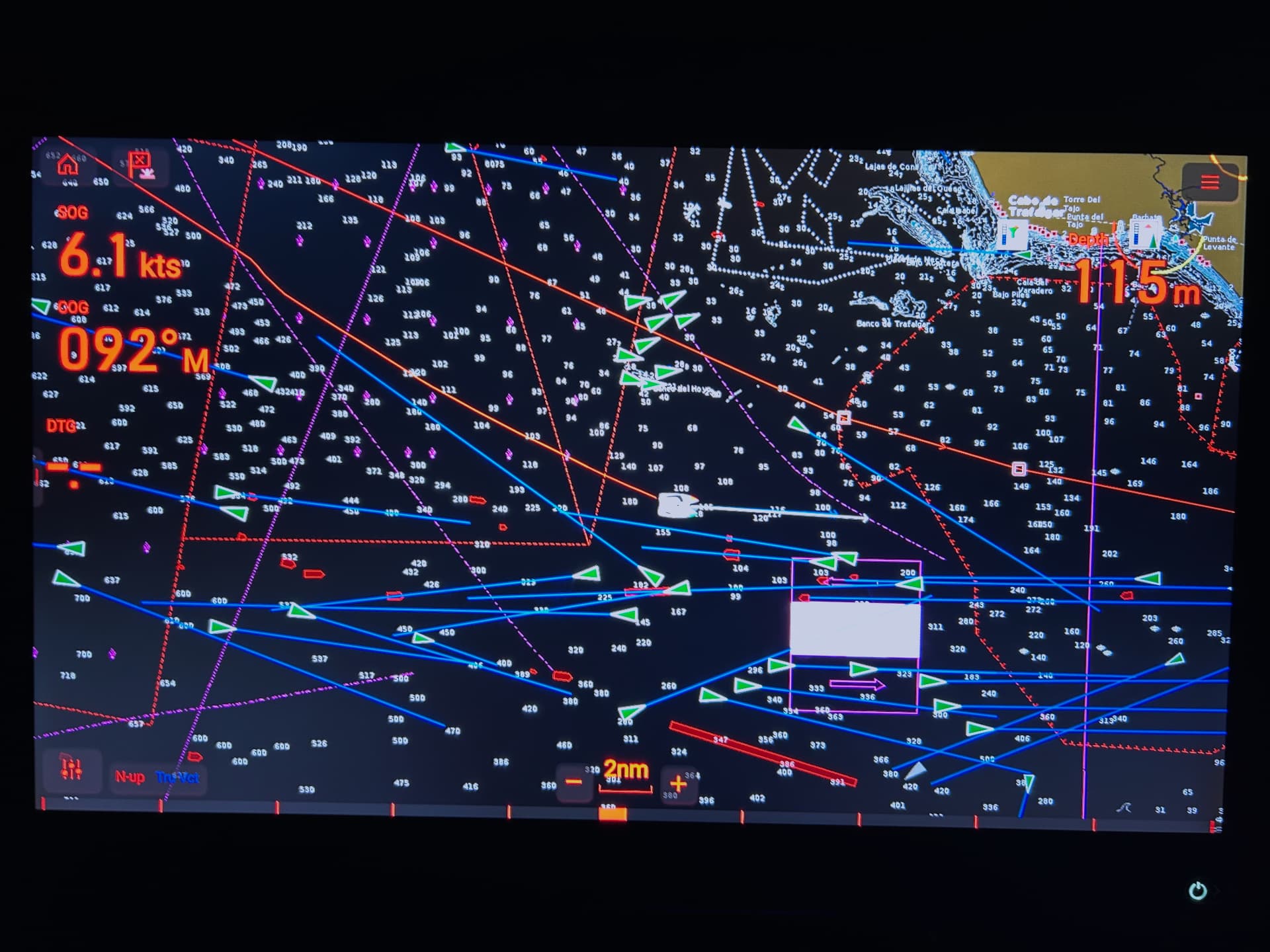
GPS vs DGPS – What Is the Difference?
How differential corrections improve satellite positioning, and why greater accuracy matters in marine navigation.
Captain's Corner Magazine · 15 August 2026
 Knowledge
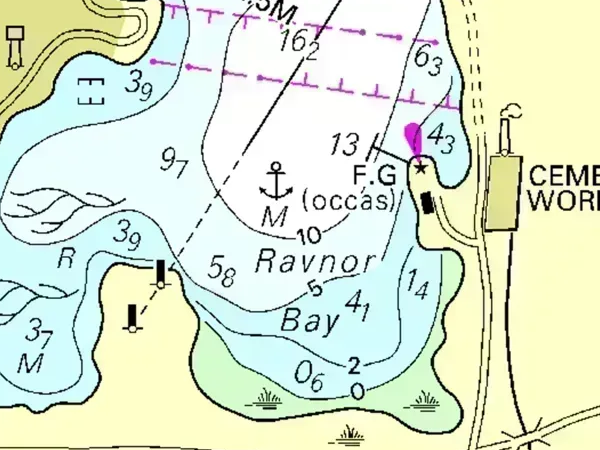
Chart Inaccuracies – Understanding the Limits of Paper Charts and ENCs
Your GNSS position may be accurate to a few metres — but the shoal on the chart may come from a survey a century old. How survey age, chart compilation and CATZOC shape what you can trust.
Captain's Corner Magazine · 17 October 2026
 Knowledge
From the Ocean to the Human Body: The Growing Impact of Plastic Pollution
A plastic bottle thrown overboard does not disappear — it fragments into microplastics that travel from the sea into soil, crops, drinking water and, ultimately, the human body.
Captain's Corner Magazine · 17 October 2026